Iris plants after a hard freeze in USDA Zone 7

Have you taken a walk in your garden lately?

This winter has brought us quite a few ‘firsts’ in our garden.  For those readers living in the northern states, plants that are hard dormant are a fact of life.  For us, however, this January was the first time in 20+ years that I have seen hard dormancy in many plant species in our USDA Zone 7 garden.
It’s a scary sight to unaccustomed eyes. On a warmish day, one may be quite tempted to pull back leaf cover and maybe even dig a little.  Just a little, to check if plants are still there. Trust me, they are.  Give them a little time and they will pop right back up and will thank you if you have not disturbed their roots.  But even if you did dig a little, they will most likely pop right back up as soon as the sun comes out.

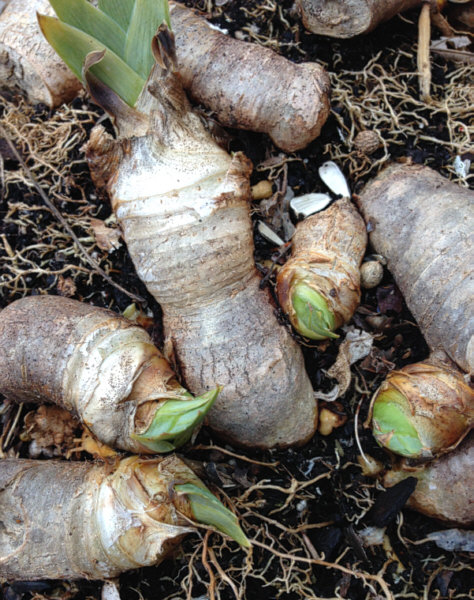
I couldn’t resist and dug a little in one of my beds.  ALL the greenery had completely frozen and disappeared from these iris plants in January – look, they are peeking back out already.

Iris plants after hard freeze

A Day in the Life of a Backyard Nursery Owner

One of my friends asked “What do you do in your business when it’s not planting time?”

mhmhmhmzzz.  The list is long.
Today, I started by watering the plants and misting the cuttings in the greenhouse.  Then I swept the greenhouse floor and turned into plant detective.  I looked for critters such as aphids and spider mites and any signs of diseases that love infesting greenhouse plants.

Next, I finished printing shipping labels and getting packages mailed out. While doing so, I noticed that I was out of the Tennessee Shipping Notification certificates that are required for plant shipments.  So the remainder of the morning was spent on printing and filling out a, hopefully sufficient,supply of the certificates for the spring 2014 shipping season.

After all that tedious work, first a lunch break and then a little fun activity:  Looking through one of the suppliers catalogs and the availability list.  Next, checking the business budget to see how much money is available for purchasing. Happy Dance, followed by a call to the broker to order some more new products, followed by another happy dance when the desired items are still available.
Then checking and answering emails, printing out paperwork for orders that will be shipped tomorrow.  Pulling and packing products.
In between: Looking at Facebook. Answering the phone. Making coffee.  Making Tea. Running a load of laundry. Knitting a few rows.

Finally, just enough time left in the day to write this blog post and then I am off to an evening yoga class.

OH, you’re wondering what I may have selected?

Honestly, it wasn’t easy.  the catalogs are always so beautiful and the selection is difficult. Maybe you know exactly what that feels like?  My focus today was a few more edibles, particularly interesting edibles that won’t be on the shelves at the local box store.

Look for these new plants in our online store Edibles section later this month.
Hardy Kiwi, Goji Berry, Haskap Berry, Seedless Red Grapes, and Seed Potatoes.

I am planning to do a potato tower this year. The last time I tried with store bought potatoes and it was not a success (despite how well the planting looked when I started out).  I have learned why and will share my experiences when the time comes to start the tower for the 2014 season.
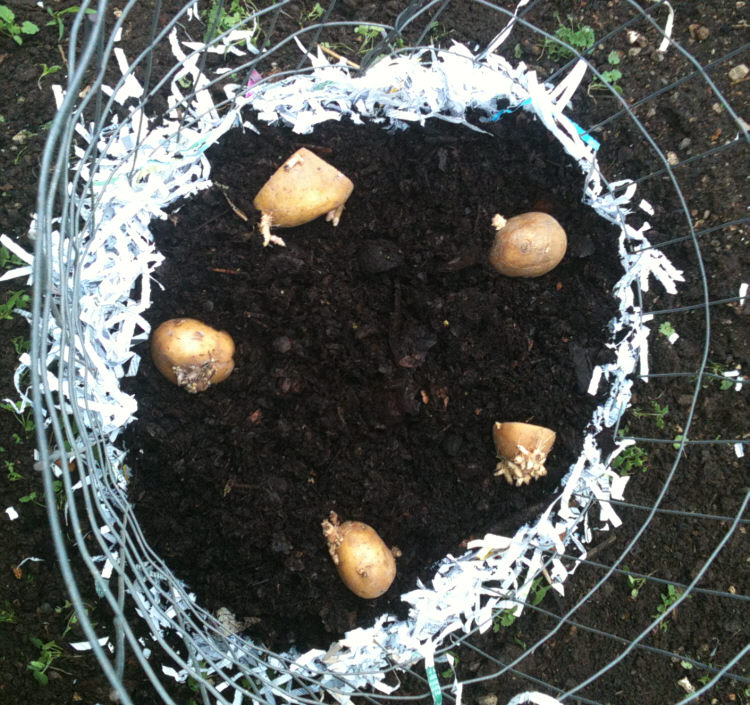
Potato Growing Tower


Knitted Crocodile Stitch Boot Toppers

A friend posted a picture of crocheted crocodile stitch boot toppers in one of my groups and I was immediately in love!  But…but…but… I hate crochet.  After looking at hundreds of knitting stitches and patterns, it was clear:  There is no pattern available for a knitted crocodile stitch.  I had to make up my own pattern.

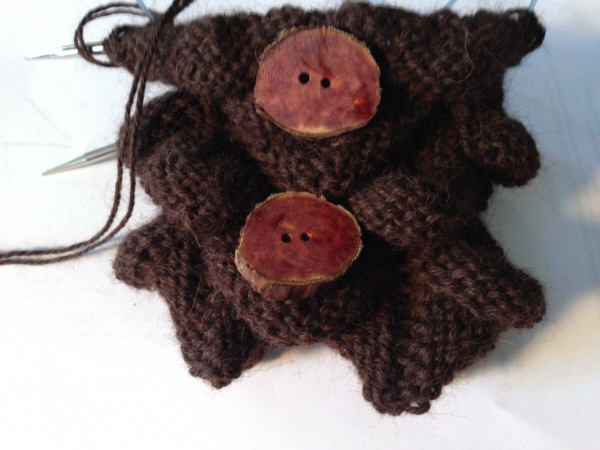
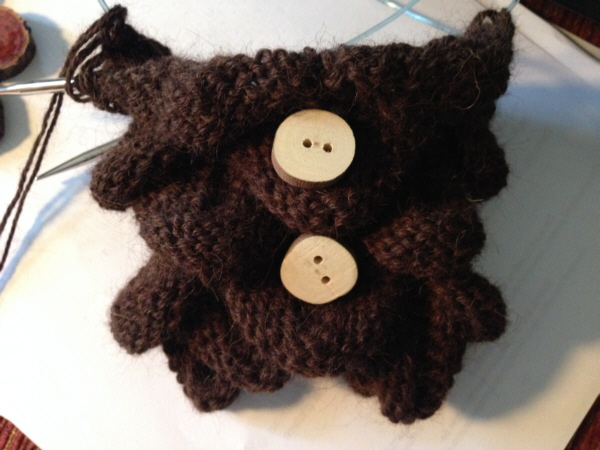
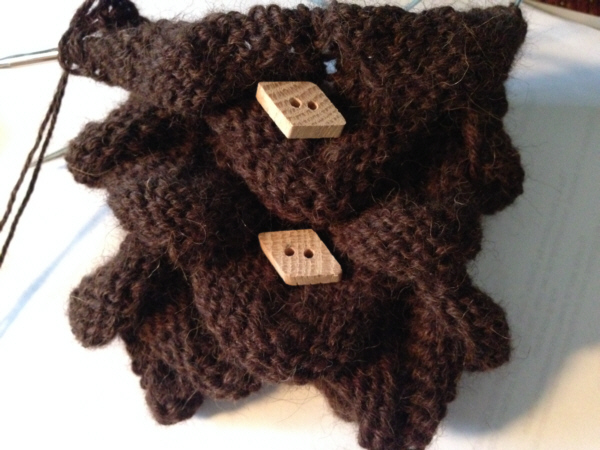
After some trial and error,  the first boot topper is nearing completion and I need some help in picking which of these buttons I should use. All buttons were crafted by my  hubby Jeff.

#1:  large round wooden button made from juniper wood
Juniper Wood Buttons#2  smaller round wooden button made from crepe myrtle wood
Crepe Myrtle Wood Buttons#3  diamond shape wooden button made from oak wood
Oak Wood Buttons


Triple flowered brugmansia Papa’s Girls

It’s been a busy and super cold week here at the Green Thumbs Galore nursery in Tennessee.  The greenhouse heater has been running near constant to keep all the tender new cuttings happy.  What are we propagating, you ask?
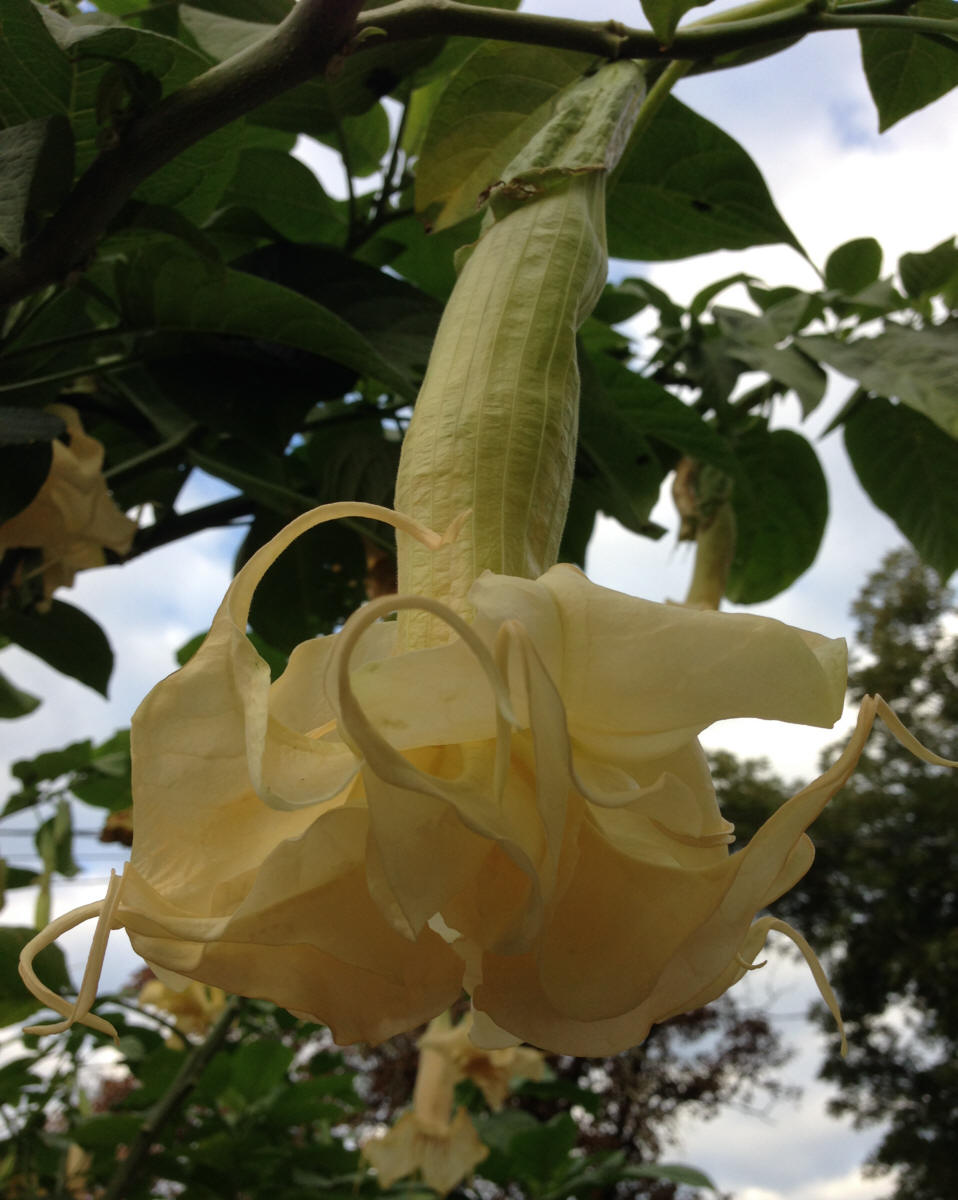
It’s brugmansia (angel trumpets) time in the greenhouse.  Our brand new introduction, Brugmansia Papa’s Girls – a triple cream angel trumpet, is rooting along.  I guess i could have picked a better week to start cuttings but since I want to be able to have plants ready for shipping in March, I had to start them now.

Here’s a picture of the flowers on this new plant, I wish you could put your nose up to the monitor to get a whiff of the heavenly citrus scent of this bloom!
Brugmansia ‘Papa’s Girls’ (Jarrett, 2014)

 Brugmansia Papa's Girls

The Unmentionables

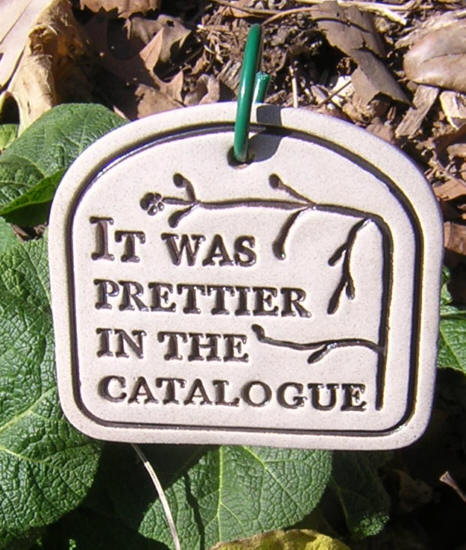
Garden SignNo matter how much I would like for the plants to look like their pictures, there’s always some with a mind of their own.

Let’s just get right down to one of the unmentionables.  Floppy plants.

How does one deal with it? One choice is to select varieties that behave, the other:
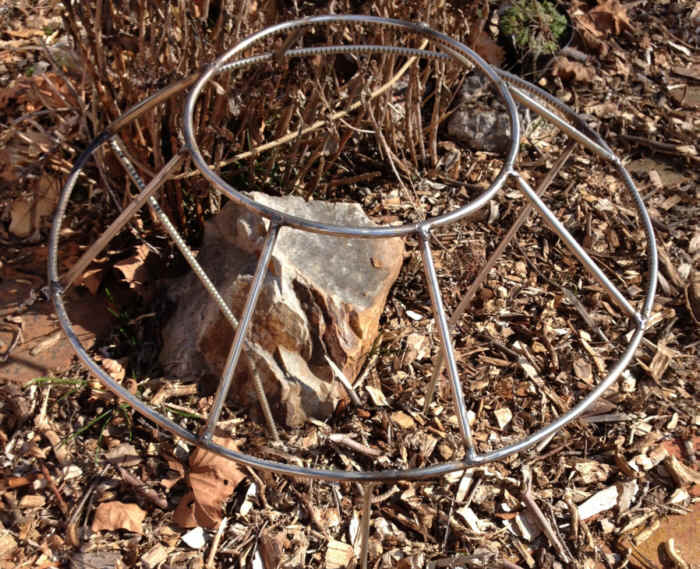
Plant cages and stakes, of course. How many plants are propped up in your garden?  If your garden is like ours, then most of the peonies have some form of support. So do some of the other perennials and, certainly, no respectable size tomato plant will be without a cage! There’s never enough supports around and eventually we just grab a stick, any stick and some rope to keep the unruly plants at bay.

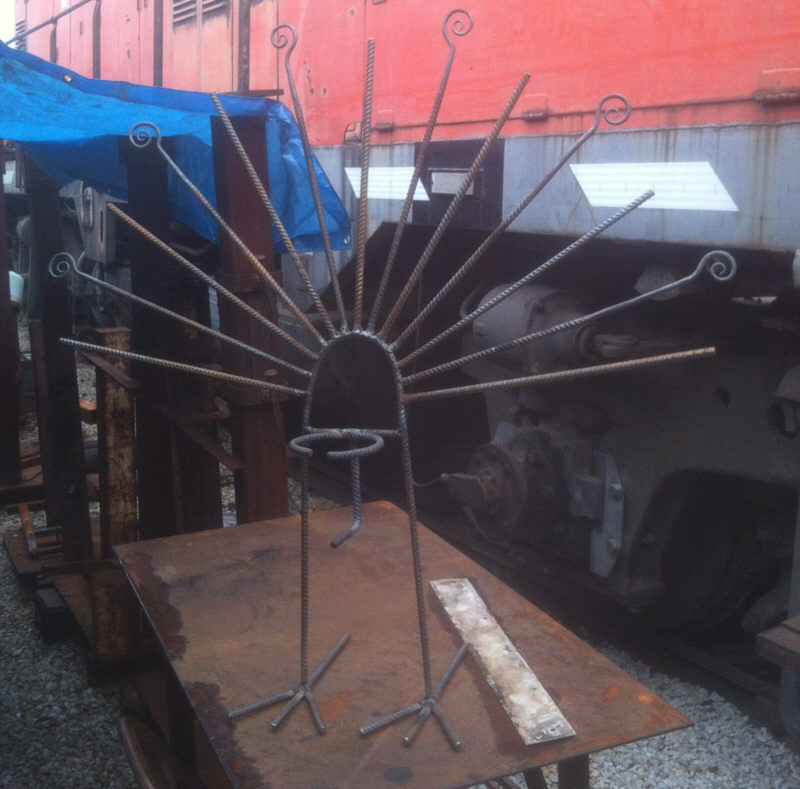
If you’ve been down to the butterfly garden by the Tennessee Aquarium, you may have noticed the decorative plant supports designed and forged by Jeff. Surely, something along those lines on a little smaller scale could be a good fit for our humongous clump of Sedum Floppy Autumn Storm. So Jeff put his mind and arms to work. Last Friday, the UFO landed.  It’s perfectly sized and I love it.
And, it’s beautiful, don’t you agree?
Steel plant support

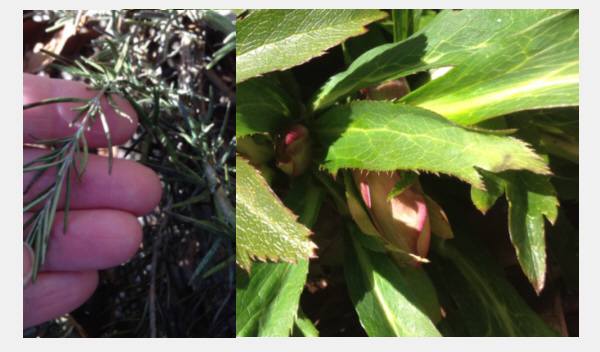
Are my plants dead?

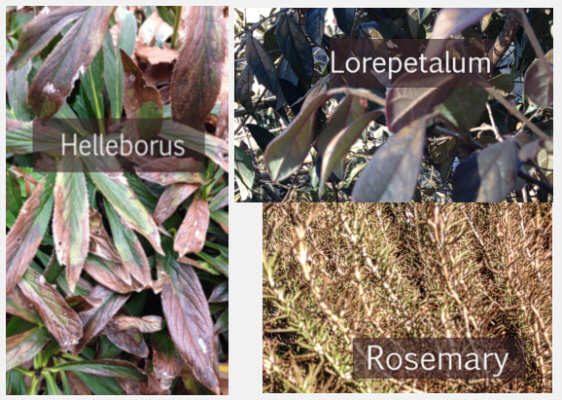
My plants here in Tennessee had completely forgotten what a hard freeze feels like.  Last week, they all got a reminder. When I walked around this morning, they were showing off their displeasure with those arctic temperatures. Do your plants look like this too?

Frozen plantsDead.  They looked DEAD!
After a deep breath, my brain said “Remember, these are perennials!”
My eyes took over and yelled “They still look DEAD!”

What to do? First I looked below the brown and crispy leaves of the Hellebore.  Lo and behold, there are little buds and green sprouts. For the more woody perennials, I took out my trusted plant tester – my fingers – and felt the stems.  Stems that feel cool to the touch are alive, dead stems feel warm.  Go ahead, go outside and feel some of your plant stems, pick up a dead branch from the ground to feel the temperature difference between a live and dead branch.  Hey, isn’t that cool?

Now I just have to remember to be patient and let the plants do their thing.  Resisting the temptation to cut back all the unsightliness is difficult, very difficult.  The time for trimming will come AFTER the plants sprout out for good this season.
Pass me the knitting needles for a bit longer.

Frozen Plants second look

Plants are not dead.


Looking for Gratitude

I have never been one for resolutions but last week, I heard an idea that I liked. Choose one word for the year and make that your focus and aspiration. My word… Gratitude.

grat·i·tude
ˈgratəˌt(y)o͞od/
noun
noun: gratitude
1.
the quality of being thankful; readiness to show appreciation for and to return kindness.

Why did I pick gratitude?  Maybe because it is part of my yoga practice – at the end several of my instructors will remind all of us yogis in the class to take a moment of gratitude for taking the time to be good to ourselves and to appreciate others and the world around us.

I am sharing my walk along the path of life with everyone else on this planet. It takes reminding now and then that my path is no different from yours, your family’s, your friend’s, and even the path of people you don’t like.

Holding a rock

Holding a rock

Some days my pack feels like it’s full of rocks and other days it’s like I have wings and speed along.  Regardless, the path must be walked.  Every day. By taking a few moments out to focus on gratitude, I can help my mind to see more of the good – and when I see the good, my pack lightens.  I can open my heart and my mind to choose how I will experience the next moment, the next minute, the next hour.  Positively and with gratitude.

Gratitude - lightness all around!

Gratitude – lightness all around!


How to import a pdf file into knitCompanion on iPhone

I like a good app.  I like a good app even better when it’s free!
I love to knit, from socks to sweaters and everything in between. I use paper and pencil, highlighters and sometimes even buttons to keep track of written patterns and charts.
Then I found knitCompanion (free version) for iPhone.  It does all that in a simple and easy to use interface. The big hurdle is ‘how in the world do I import my pattern?

Once you open the app, there’s a big ‘projects’ and another big ‘pdf’ button. Neither of them will take you to a place where you’ll be able to add your own pattern.  Well, phoooeyyyyy!  This app stinks!   Not quite.  Here’s a step-by-step guide on how to import your pattern.

  1. open your pdf on your device (i use dropbox)
  2. select forward (image1) and then open in… (image 2) knitCompanion (image 3)
  3. select ‘new project (image 4)
  4. select all pages (image 5)
  5. give your project a name and tell knitCompanion to ‘create project (image 6)

Voila – you’re done! Now you can enjoy all the tools from row counters to highlighting sections of text and marking locations (image 7).  The free version of knitCompanion even opens charts!


[fgallery id=4 w=600 h=545 t=0 title=”knitCompanion”]